Why Is My Child So Overwhelmed? Finding What Helps Them Regulate

Updated: Aug 16
One minute, everything seems fine. The next, your child is crying, hiding, yelling, running away, refusing, going silent, or melting into the floor. It can feel sudden from the outside, but overwhelm often builds before adults can see it.
Children can become overwhelmed for many reasons. Too much noise, bright lights, scratchy clothing, fatigue, hunger, frustration, transitions, communication demands, unexpected changes, or simply too many demands at once can all add up. Sometimes sensory input is part of the picture. Sometimes it is not. Most often, it is a mix.
The goal is not to label every difficult moment or force a child to “calm down.” The goal is to understand what may be making the moment too hard and help make it more manageable.

Overwhelm can have many starting points
When a child is overwhelmed, it can be tempting to search for one clear cause. Was it the noise? The transition? The missed snack? The crowded room?
Sometimes there is one obvious trigger. Other times, the hard moment is the result of several small stressors stacking together.
A child might manage the school assembly, then lose it when asked to put on shoes. The shoes may not be the whole problem. They may just be the last demand after a long morning of noise, sitting still, bright lights, and trying to follow instructions.
Common reasons children may become overwhelmed include:
Too much sound, movement, light, touch, smell, or visual clutter
Fatigue, poor sleep, illness, or low energy
Hunger, thirst, or needing the bathroom
A transition away from something enjoyable
A new place, new people, or an unexpected change
Frustration with a task that feels too hard
Pressure to answer questions or explain feelings
Too many instructions at once
Waiting, rushing, or feeling out of control
Big emotions after holding it together for a long time
This is why child sensory overwhelm should be understood as one possible piece of the puzzle, not the only explanation for every episode.
Some children can tell you what is wrong. Many cannot, especially in the moment. A child who is overwhelmed may not have the language, energy, or body control to say, “The room is too loud,” or “I need a break,” or “I do not know what is happening next.”
Their behavior may be the message.
Notice what happens before, during, and after
You do not need a perfect chart or a complicated system to start noticing patterns. A few quick notes after a hard moment can help you see what your child may be reacting to.
Try looking at four simple areas.
What happened before the overwhelm
Think about the hour before the moment, not just the last few seconds.
Was your child hungry? Tired? Rushed? Asked to stop a preferred activity? Around a lot of people? Trying to communicate something important? Dealing with disappointment?
Also notice whether your child had been “keeping it together” for a while. Some children manage school, errands, appointments, or family gatherings with huge effort, then fall apart when they finally feel safe.
What the environment was like
Look around with your child’s body in mind.
Was the space loud, bright, crowded, hot, cold, echoey, busy, or full of strong smells? Were there tags, seams, sticky hands, or uncomfortable shoes? Was the TV on while people were talking? Were multiple people giving instructions?
Adults often tune out background input. Children may not be able to.
What the child may have been communicating
Overwhelm is not always refusal. It can be a signal.
A child may be communicating:
“I need a break.”
“I do not understand.”
“This is too loud.”
“I need help starting.”
“I am scared.”
“I am hungry.”
“I cannot answer right now.”
“Something changed and I was not ready.”
This does not mean every behavior is acceptable or safe. It means the response will work better when it addresses the need underneath.
What seems to help
After your child begins to recover, notice what made a difference.
Did they settle with less talking? A quieter room? A snack? Movement? Being left alone nearby? A firm hug they asked for? A visual reminder? A predictable next step?
Patterns matter more than one-time guesses. If the same support helps again and again, it may be worth building into daily routines.

Try supports that make the moment easier
Regulation support does not have to be fancy. Often, the most helpful changes are simple, calm, and consistent.
The right support depends on the child and the situation. A strategy that helps one child may irritate or overwhelm another. The same child may also need different support on different days.
Reduce noise and stimulation
If the environment feels too big, start by making it smaller.
You might:
Turn off background TV or music
Lower voices
Dim bright lights when possible
Move away from crowds
Offer headphones if your child likes them
Reduce visual clutter in the immediate space
Pause extra questions and instructions
For many children, fewer words help. Instead of explaining, correcting, and asking questions, try one short sentence.
“Let’s sit over here.”
“I’m going to turn the sound down.”
“You are safe. We can pause.”
Create a quieter space
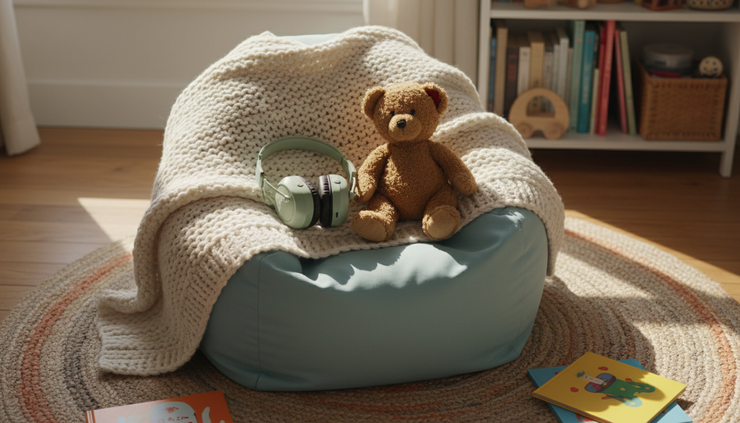
A quieter space does not need to be a special room. It might be a corner of the couch, a bedroom, a hallway away from guests, the car with an adult nearby, or a small tent with pillows.
The purpose is not punishment or isolation. It is a place where the child can recover with less input.
A helpful quiet space may include:
Soft lighting
A favorite blanket or stuffed animal
A few familiar books
Water nearby
Simple comfort items
Enough room to move or curl up
Some children want an adult close. Others need space. Try to respect what your child’s body seems to be telling you, as long as they are safe.
Use predictable routines and visual supports
Uncertainty can make everyday moments harder. Predictable routines help children know what is coming next.
Visual supports can be especially useful because they do not disappear the way spoken words do. They can include:
A simple picture schedule
A first and then board
A checklist for getting dressed
A timer for transitions
A photo of the next place you are going
A small card that says “break”
Visual supports are not only for children who cannot talk. Many children understand better when they can see the plan.
Before a transition, try giving a clear warning and a next step.
“Five more minutes, then shoes.”
“First bathroom, then car.”
“After dinner, bath, pajamas, story.”
Keep it simple. Too much explanation can become another demand.

Offer body-based support when it fits your child
Some children regulate through movement. Others need stillness. Some seek pressure, chewing, rocking, swinging, or heavy work. Others find those same things uncomfortable.
This is where individual differences really matter.
Movement breaks can help release built-up energy
Movement can help some children reset before they reach overload. It can also help after a demanding activity.
Try simple options like:
Wall pushes
Animal walks
Jumping on a safe surface
Carrying a laundry basket with light items
Stretching
A short walk
Dancing to one song
Pushing a stroller or cart
Climbing at a playground
Movement breaks often work best before the child is fully overwhelmed. Once a child is in distress, they may not be able to follow a movement suggestion.
Comfortable sensory tools can support some children
Some families use calming sensory tools such as chewable jewelry, fidgets, weighted lap pads, soft blankets, noise-reducing headphones, or textured items. These tools do not treat anxiety, autism, sensory disorders, or any medical condition. They are simply supports that may help some children feel more comfortable or organized in certain moments.
The key is fit.
A helpful tool is one your child accepts, enjoys, or seeks out. If your child throws it, avoids it, chews it unsafely, becomes more upset, or seems distressed, it is not the right tool for that moment.
Think of tools as options, not solutions. The relationship, the environment, and the child’s needs still matter most.
Deep pressure should be child-led and safe
Some children enjoy deep pressure, such as a firm hug, being tucked under a blanket, or using a weighted item. For others, pressure can feel trapping, frightening, or irritating.
Only use deep pressure when your child clearly enjoys it, seeks it, or can consent to it. Stop right away if they pull away, tense up, say no, push, cry, or seem uncomfortable.
A good rule is simple. Pressure should calm the child’s body, not control it.
Never use pressure to hold a child down as a calming strategy. If safety is a concern, seek professional guidance.
Give recovery time instead of rushing the reset
When children are overwhelmed, their thinking skills may drop. They may not be able to explain, apologize, problem-solve, or learn a lesson right away.
After a big episode, a child may need time to recover. That recovery might look like quiet, sleep, food, movement, comfort, or being near a trusted adult without much talking.
During recovery, try to lower demands for a while.
You can:
Offer water or a snack if appropriate
Keep your voice low
Avoid long discussions
Give simple choices
Reduce the number of people nearby
Use familiar routines
Allow quiet time before returning to the activity
Later, when everyone is calm, you can gently reflect.
“Earlier, the grocery store felt hard. I noticed it got loud near the checkout. Next time, we can bring headphones or take a break outside.”
This keeps the focus on learning and support, not shame.
It also helps children build self-understanding over time. They may start to notice, “I need a break,” “It’s too loud,” or “I’m hungry,” before overwhelm takes over.
Know when to get more support
Many children have overwhelmed moments. Hard days happen, and families can often make meaningful changes by adjusting routines, expectations, and environments.
Professional support can help when overwhelm regularly affects daily life or safety. Consider reaching out to your child’s pediatrician, teacher, occupational therapist, speech-language pathologist, mental health professional, or another trusted provider if overwhelm often affects:
Safety for your child or others
Eating, drinking, or growth
Sleep
School attendance or learning
Communication
Toileting or hygiene
Leaving the house
Family routines
Friendships or play
Everyday participation
It is also worth seeking help if episodes are becoming more intense, happening more often, or leaving your child or family exhausted.
Getting support does not mean something is “wrong” with your child or with your parenting. It means the current demands may be bigger than the current supports. A professional can help look at the full picture and suggest steps that fit your child’s needs.
This article is for general information and support. It is not a diagnosis or medical advice.
Start with curiosity and one small change
When a child is overwhelmed, the most helpful question is often not “How do I stop this?” It is “What is making this moment too hard?”
That question opens the door to support.
Maybe the room needs to be quieter. Maybe the transition needs a visual cue. Maybe your child needs food, sleep, movement, fewer words, more time, or a safe place to recover. Maybe a pattern is starting to appear, and that pattern can guide the next step.
Start small. Pick one situation that happens often, such as getting out the door, bath time, homework, or grocery shopping. Notice what comes before the overwhelm. Change one thing. Watch what helps. Keep what works, and let go of what does not.
Regulation is individual. Your child does not need every strategy. They need the supports that make their world feel a little more manageable.
You don't have to know what it's called. Start with what you need help with.


Comments